Grid meter and charger
Phase currents, power and charger state on site.
Dynamic load balancing needs to know what the building is drawing, second by second. mini-OTG reads the grid meter and the charger on site and delivers both to your charging platform, which decides the charging limit.
Discuss your integration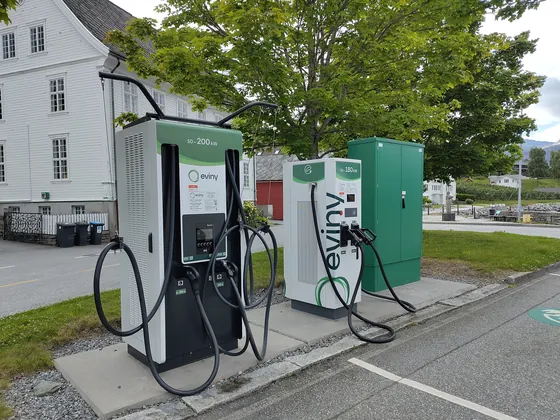
A charger that does not know the site load either charges slowly to stay safe or risks tripping the main fuse. Charge-point operators and EMS providers solve this with a meter reading at the grid connection, but every site brings a different meter, charger brand and network situation.
Wi-Fi at the meter cabinet is the usual failure point: the gateway drops off the customer network, the platform loses the reading, and a support call follows. mini-OTG prefers Ethernet, uses Wi-Fi or 4G LTE as configured fallback, and buffers readings so the platform sees an ordered history after an outage.
Your platform stays the controller. Where the charger and its qualified profile support it, charging commands travel back from your CSMS or EMS through the gateway to the charger over Modbus, OCPP or EEBUS.
Product capability, not a compatibility list. We qualify exact models, firmware and profiles against your deployment.
An installer configures the gateway on its local web server and enters your endpoint and credentials. Data goes straight to your platform. No mini-OTG cloud sits in between.
Phase currents, power and charger state on site.
Readings arrive on your broker or API in your schema.
Your platform sends the limit back to qualified chargers.
It covers a broader job. A P1-to-Modbus converter passes one meter reading to one local device. mini-OTG reads the meter and the charger, sends both to your charging platform, and forwards your platform's commands to qualified chargers over Modbus, OCPP or EEBUS.
Chargers speaking Modbus RTU/TCP, OCPP or EEBUS are within the product scope. Each model and firmware version is qualified against your control requirements during the evaluation before it is listed as compatible.
No. The gateway delivers measurements and forwards commands. Your CSMS or EMS keeps the charging logic, the customer relationship and the data.
DIN-rail smart meter gateway for the P1 or HAN port (DSMR, eMUCS-P1, Modbus). Live meter data straight to your MQTTS broker, WebSocket or HTTPS API.
Read PV inverters, battery storage and the grid meter over Modbus RTU/TCP and deliver to your EMS via MQTTS, WebSocket or HTTPS. No middle cloud.
Connect heat pumps and HVAC through SG Ready, EEBUS or Modbus. Your platform monitors them and sends flexibility commands. White-label edge gateway.
We scope an evaluation around your named devices, your endpoint and the evidence you need.